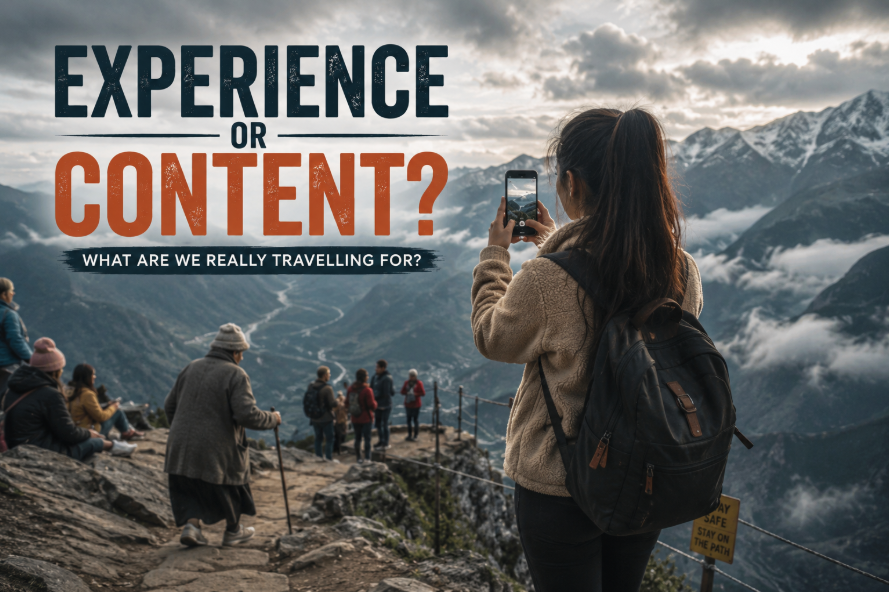
The Future of Travel According to Digital Nomads.


Travel concept has evolved tremendously over the past ten years. It no longer involves two-week holidays, sightseeing, and crossing places off a list. A new generation of professionals is redefining the global travel economy: Digital Nomads.
These are distant employees, business people, innovators, and freelancers who employ technology to work anywhere on the planet. And their lifestyle is not only changing the direction people are visiting, but also how countries develop visas, cities develop infrastructure, and how brands sell experiences.
This is the way digital nomads are reinventing the future of traveling.
Travel is no longer a temporary thing; it is more of a lifestyle thing.

The traditional tourism is both experience-based and short-term. Digital nomad travel is a long-term, lifestyle-based travel.
Instead of:
7-day hotel stays
Hectopic sightseeing agendas.
Resort-based vacations
Nomads prioritize:
Monthly apartment rentals
Reliable Wi-Fi
Access to co-working spaces
Community and networking
Cities are reacting to this by constructing complete ecosystems near remote workers. Such destinations as Bali, Lisbon, Medellin, and Dubai are no longer destinations, but remote work locations.
This change implies that traveling is becoming part of everyday life.
The Emergence of the Digital Nomad visas.
Governments have observed the economic opportunity. In the last several years, dozens of nations have launched digital nomad visas, allowing remote employees to spend 6 to 24 months in a country legally earning income abroad.
Why are countries doing this? Because digital nomads:
Expenses invariably (rent, food, transport)
Don't compete for local jobs
Stimulate the local economies with less social burden in the long term.
This new policy is transforming the immigration patterns - temporary and skilled workers who can work without worrying about settlement pressure.
Travel is going to be policy-based.
Office Areas Are Turning into Travel Infrastructure. Destinations were characterized by airports and beaches. The speed of Wi-Fi and the density of coworkers are now equally important. Hotels are evolving:
Dedicated work pods
Long-stay discounts
Built-in coworking lounges
Boutique accommodations or cafes are currently advertising:
Internet speeds
Work-friendly environments
Networking events
Cities and villages are being formed around digital nomads. Travel does not mean escape anymore, but it means mobility and being productive.
More Incident-Free travel, deeper cultural travel.
Digital nomads tend to spend months in a single location, unlike traditional tourists. This leads to:
Stronger local engagement
Language learning
Inclusion in local societies.
Support for small businesses
Nomads, rather than overloading tourist hotspots over a few days, have a hand in more durable economic activity.
This change promotes sustainable models of tourism.
Urban development and real estate are changing.
The demand in the cities where digital nomads are attracted is spiking in:
Short-term furnished rentals.
Co-living spaces
Flexible housing contracts
Developers are building:
Community-driven housing
Work-and-live hybrid spaces
Shared office apartment complexes.
Nonetheless, this is a source of tension as well. In certain cities, the increase in rents associated with remote employees has created a controversy in terms of affordability and displacement.
The digital nomad trend is not only changing the travel sphere, but it is also changing urban economics.
The evolution of the airline and loyalty program
Digital nomads do not venture out on an annual or bi-annual basis. They travel constantly.
This is forcing airlines and travel brands to reconsider:
Multi-destination long-term passes.
Flexible ticket policies
Travel models that are subscription-based.
Vacation-based rewards are being replaced by mobility-based rewards through loyalty programs. Travelling is turning out to be a regular cost and no longer a luxury that is seasonal.
The movement is powered by technology.
There would not be the digital nomad lifestyle without:
Cloud collaboration tools
Video conferencing system.
Freelance marketplaces
Borderless payment systems
There would not be a digital nomad lifestyle.
The improvement of fintech, international money transfers, and decentralized working platforms is facilitating the lives of cross-border life.
In most aspects, digital nomads are the first-scale global workers who do not rely on any particular location.
Challenges and criticism

The way of life is not always revered. Critics argue:
It has the potential to increase the housing prices in the locality.
It occasionally causes bubbles in the economy.
It might not be culturally integrated in the long run.
Governments are currently striking a balance between openness and regulation to guarantee sustainable gains for the local communities.
Responsible policy and reciprocal adaptation also seem to be the future of nomadic travel.
What the future looks like
By 2030, experts predict:
Structured nomad programs will be provided in more countries.
Cohabitation and co-working will come together even more.
Travel insurance will be fully adjusted to long-term distant locations.
Remote work will not become an exception even in the traditional industries.
Home will be redefined or made more dynamic for a significant part of the global workforce.
Travel will not involve abandonment of life, but it will be carrying life along.
Final takeaway
Digital nomads are not a trend only. They symbolize a reorganization of the way individuals perceive work, boundaries, and freedom.
They are:
Redefining tourism
Impacting immigration policy.
Reshaping urban real estate
Changing airline economics
Compelling the governments to compete over talent.
Travel no longer has a destination.
It is about being mobile, flexible, and living the world over by choice.
Continue navigating The ScreenLight to stay up to date.