ScreenCrimes: Know Hiroshi Maeue, the “Su*cide Website Murderer”

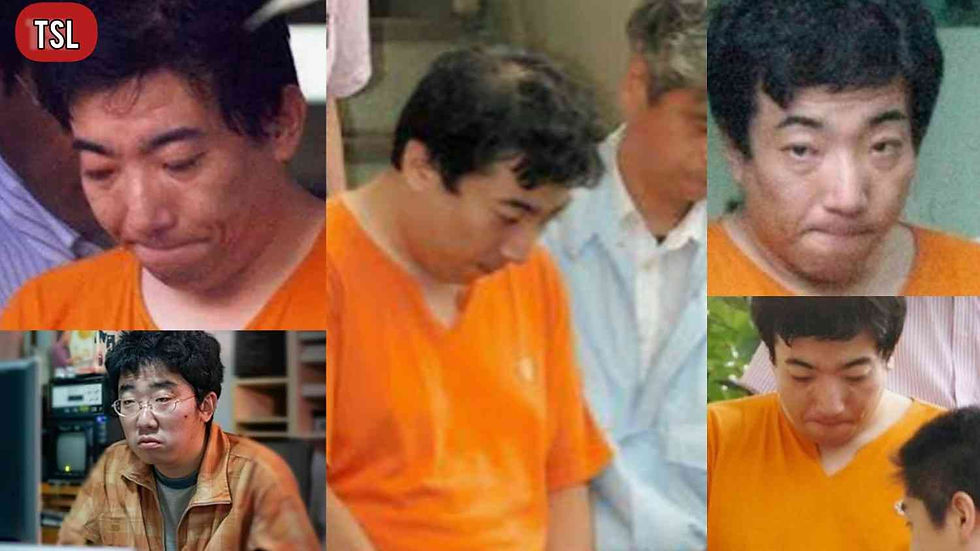
Some crimes don’t begin in dark alleys or late-night confrontations. Some begin quietly. On a screen. With a message that looks almost harmless.
What if the place where someone trusted you was the very place you were hunted?
What if someone saying “I understand” weren’t comforting but terrifying?
The story of Hiroshi Maeue doesn’t feel like old crime lore. It begins with lonely messages typed on a computer screen, people in pain reaching out for connection, and it ends with calculated violence that shocked Japan and forced a closer look at how easily trust can be misused online.
When we talk about internet homicide, most people imagine chance encounters or impulsive acts. But Hiroshi Maeue didn’t act on impulse. He turned vulnerability into a hunting ground. He waited for people to open up. He listened. And then he used that trust against them.
Who was Hiroshi Maeue, and what set him on this path?
Hiroshi Maeue was born on August 8, 1968, in Osaka Prefecture, Japan. Long before his name showed up in headlines, there were early incidents that were later impossible to ignore. At the time, they didn’t look like warnings. They looked like isolated incidents. Easy to explain away. Easy to move past.
In 1988, while studying at the Kanazawa Institute of Technology, Maeue tried to strangle a male friend. It was sudden. Violent. Completely out of place. He dropped out of college soon after. Back then, it may have seemed like a disturbing episode. Now, it reads as the first visible sign of repeated violence.
The pattern kept returning.
In 1995, he similarly assaulted a work colleague by trying to strangle him. In 2001 and again in 2002, there were more attacks with the same pattern. Each time he was released, nothing really changed.
Maeue told police that mystery novels may have influenced his repeated use of strangulation he read as a child. Investigators noted the claim but did not treat it as an explanation for the pattern of violence.
How Hiroshi Maeue used online su*cide spaces to lure people
In 2005, after being released from prison again, Hiroshi Maeue found Japanese internet forums where people openly discussed su*cide. These were not sensational spaces. They were quiet, heavy places where users spoke about pain, loneliness, and the fear of dying alone. Maeue didn’t stand out there.
He blended in.
He spoke softly. He matched the tone of despair. He didn’t argue or challenge anyone. What he offered sounded like understanding. Like companionship. But it wasn’t.
Through private messages, Hiroshi Maeue convinced several users that they could end their lives together using carbon monoxide from a charcoal burner in a sealed car, a method that had circulated in some online communities at the time. He promised they wouldn’t be alone. He convinced them he was just like them.
But when they met him in person, he killed them instead.
The victims of Hiroshi Maeue and what was taken from them
Between February and June 2005, three people were killed by Hiroshi Maeue.
A fourteen-year-old boy who believed someone finally understood him.
A twenty-five-year-old woman whose future ended quietly in a parked car.
A twenty-one-year-old university student who thought he had found someone just as lonely as he was.
None of them were “numbers.” None of them was just part of a case file.
During the trial, prosecutors described Maeue as a “lust murderer.” He later admitted something that removed any remaining doubt about motive. He said, “I wanted to see a face in agony”.
This was never about shared pain. It wasn’t about mercy. It was about control.
From arrest to sentence: how justice caught up with Hiroshi Maeue
Once police began tracing online messages, meeting arrangements, and car rentals, the picture snapped into focus. This wasn't a coincidence. The same name kept appearing. By August 2005, Hiroshi Maeue was arrested.
In court, the question wasn’t whether the crimes happened. It was how deliberately they were carried out.
The Osaka District Court focused on how Maeue sought out people who were already vulnerable, already talking about wanting to die, and used that trust to get close to them. Judges described the killings as calculated and cold.
On March 28, 2007, the court sentenced Hiroshi Maeue to death, citing the cruelty of the crimes and the repeated, intentional way they were committed.
An appeal was filed, as is common in death penalty cases. But Maeue didn’t pursue it for long. He later withdrew the appeal, saying he was willing to “pay for his crimes with his life.”
On July 28, 2009, at the Osaka Detention House, Hiroshi Maeue was executed by hanging. He was 40 years old.
Why the story of Hiroshi Maeue still matters
What makes this case linger isn’t shock value. It’s how ordinary it feels.
Hiroshi Maeue didn’t attack people in dark alleys. He didn’t act in public rage. He sent messages from behind a screen. He waited for people to trust him. He looked for vulnerability and used it as a weapon.
Because it asks a hard question we don’t like sitting with:
What happens when connection becomes a weapon?
Behind every username is a real person. A real life. A future that mattered. This case is a reminder quiet, unsettling, and impossible to ignore that vulnerability deserves protection, not exploitation.
That’s why this story still needs to be told.
Follow The ScreenLight for more crime stories like this.


