Sam Altman pushes back: AI isn't to blame for tech industry layoffs

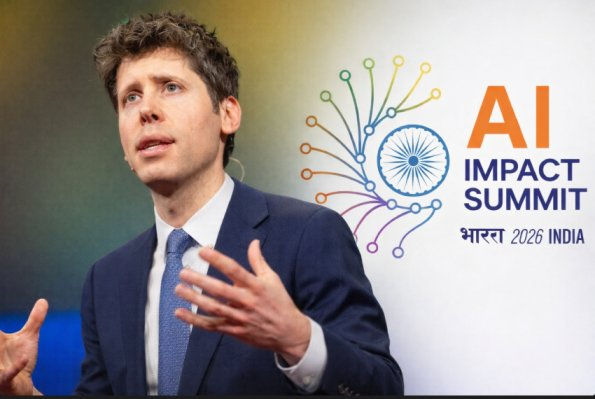
The growing argument that AI is the leading cause of recent layoffs in the technology sector has been contested by the OpenAI CEO, Sam Altman. In his speech at the AI Impact Summit in New Delhi, Altman maintained that even though automation is reorganizing the work environment, companies must not blame AI when reducing their workforce.
His comments are amidst the ongoing layoffs in worldwide technologically based companies. With the debate of the future of work still ongoing among executives, Altman offers an additional layer to the discussion, where job loss is consistently attributed to the new technologies.
Where the AI Layoff Narrative Met Direct Resistance
During his public address, Altman stated that companies cannot "blame everything on AI" when they announce layoffs. He proposed that a significant number of cuts in the workforce is not due to technological disruption but a result of traditional business cycles.
Outlets such as Business Insider, Yahoo Finance, and The Times of India reported on his claim that over-hiring during the pandemic, the need to cut revenue, and the reorganization actions continue to play a major role in the present-day job losses.
Why Modernization Has Become a Convenient Explanation
Altman introduced the concept of "AI washing", which refers to a tendency of organizations to present layoffs as the result of automation when other forces drive their decision-making. In his view, framing downsizing as a modernization strategy can make cost-cutting appear forward-looking rather than reactive.
He acknowledged that actual displacement is occurring in certain regions.
However, he emphasized that some announcements exaggerate AI's immediate impact to align with broader narratives of digital transformation.
Beyond AI: The Business Forces Reshaping Tech Jobs
The data provided in the industry supports some of the arguments by Altman. A study cited by Fortune discovered that almost 90 percent of the surveyed executives indicated that AI did not have any quantifiable effect on employment in the last three years. This implies that the cuts in the workforce might be a measure of rebalancing finances as opposed to extensive automation.
During the pandemic, many technology companies went on a rampage due to the expectation of long-term digital demand. Firms also made changes in staffing as growth returned to normal, based on updated forecasts, regardless of the use of artificial intelligence.
AI and the Workforce: Adaptation Over Replacement
Altman repeated the old argument that AI is a productivity aid, not a mass replacement of human labour. He has claimed that those who incorporate AI in their work processes can have a competitive advantage, and the technology does not necessarily remove jobs by default.
He forecasted that in the next few years, the more concrete impacts of AI on the job market will be felt. To him, at present, augmentation, or the increase of human capacity, is the prevalent tendency, instead of replacement.
The Industry Splits Over the Short-term Effect of AI.
Not all technology leaders are as measured as Altman. Some executives have predicted that in a few years, automation may be able to perform half of white-collar jobs. The projections raise concerns about structural changes in professional employment.
Nonetheless, the existing statistics give a mixed picture. Although some industries are testing automation devices, the extensive labor displacement directly related to the use of artificial intelligence is minimal, based on recent surveys and disclosures by executives.
The comments of Sam Altman highlight a more general argument concerning responsibility and technological change. Although AI is changing rapidly, it is not the case that all layoffs in tech can be attributed to automation because the economic environment is a complex one.
The discussion seems to be changing to adaptation strategies as companies continue to refine their strategies. At this point, the essentials of business and market dynamics continue to be at the core of the workforce changes in the technology industry.
Want to get regular updates about Tech? Stay tuned to The ScreenLight.


